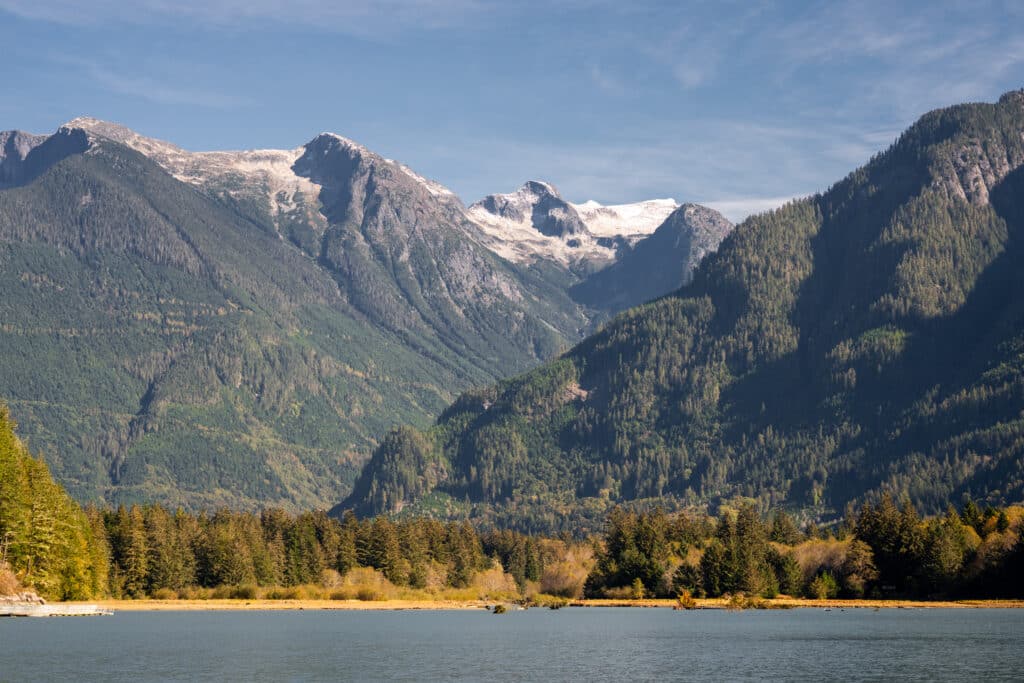
Where the Discovery Passage meets the mountains of Strathcona Provincial Park, Campbell River sits at one of British Columbia’s most dramatic natural crossroads along the inside coast of Vancouver Island. Here, you’re equally likely to watch a humpback whale surface at dusk as you are to hike beneath old-growth rainforest the next morning.
Campbell River is officially known as the Salmon Capital of the World, a nickname earned through its extraordinary fishing culture that has shaped the city for generations. But the city’s appeal stretches well beyond the water. Visitors come here for whale watching, hiking, sea kayaking, mountain biking, skiing, cultural tours, and as a jumping off point to Desolation Sound and the Discovery Islands.

This guide covers the top things to do in Campbell River, from free outdoor adventures to guided wildlife tours. Whether you’re planning a day trip or a week-long wilderness base camp, you’ll find everything you need to plan your visit here.

1. Elk Falls Provincial Park & Suspension Bridge
A 25-metre waterfall plunging into a dramatic basalt canyon, Elk Falls is one of the most spectacular natural sights on Vancouver Island.
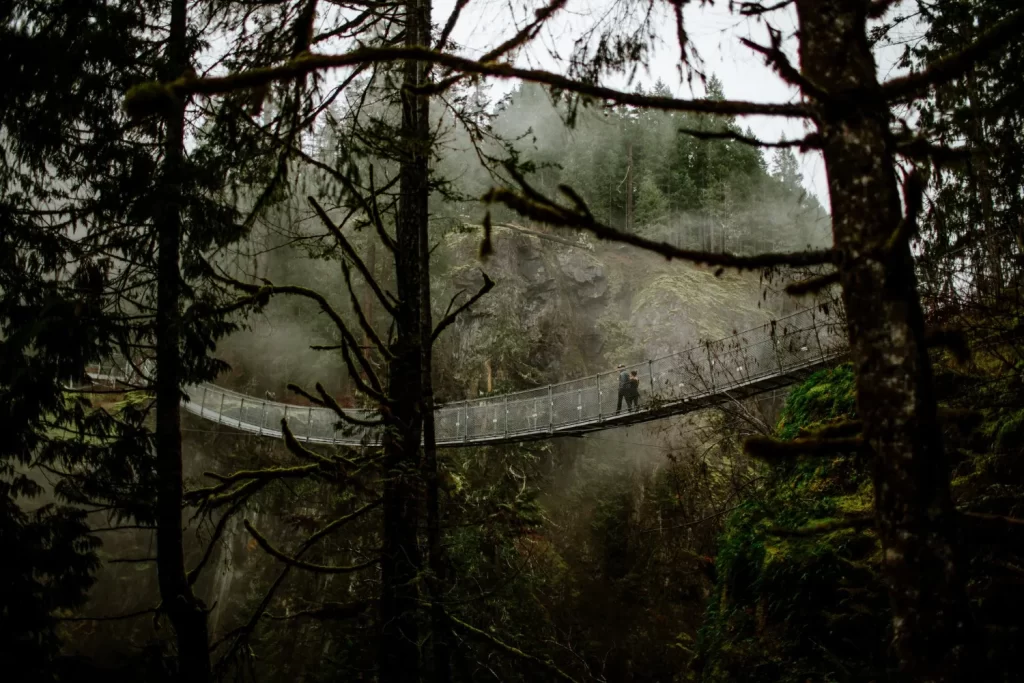
The Experience: Visitors cross a 60-metre suspension bridge positioned directly above the falls, with the full force of the Campbell River roaring below and old-growth forest stretching out on either side. The shortest return trail is 1.6 km (allow 45 minutes), with longer loop options of 2–3 hours for those wanting to explore further into the canyon and old-growth rainforest.
Trip Planning:
- Location: Elk Falls day-use area, Brewster Lake Road off Hwy 28 approx. 3 km west of Campbell River, turn onto Elk Falls Park Road (signed). Parking lot coordinates: 50.0414°N, 125.3208°W.
- Cost: Free (no day-use fee required)
- Hours / Season: Open year-round; parking lot accessible dawn to dusk. Full services (water, firewood) run late March to November 1; winter access remains open with no services
- Accessibility: Suspension bridge requires stairs and is not wheelchair accessible; a wheelchair-accessible viewpoint is available at the canyon rim. Trail surfaces vary with sturdy footwear recommended
- Booking: Not required
- Official page: bcparks.ca/elk-falls-park
Insider Tip: Visit on a weekday morning in spring for the highest water flow and the fewest crowds.
2. Whale Watching from the Discovery Passage
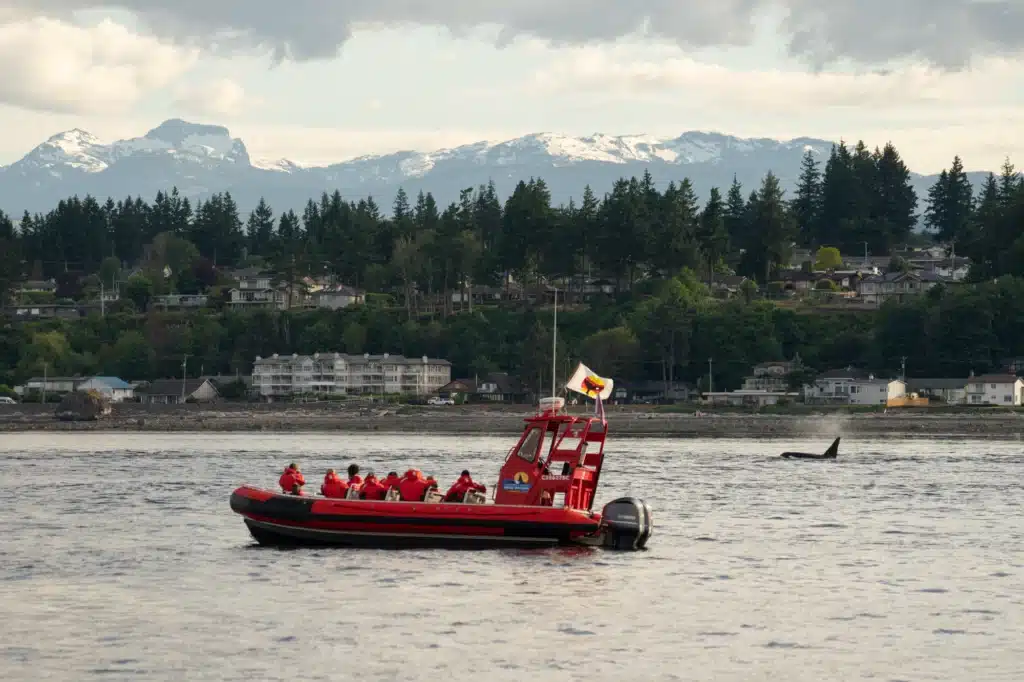
Campbell River sits at a natural bottleneck in the Inside Passage, making it one of the most exciting whale-watching locations on Vancouver Island’s east coast. Orca, humpback, minke, and Dall’s porpoise are regularly sighted in the Discovery Passage.
The Experience: Guided tours depart from the Campbell River waterfront between April and October, taking passengers into the surrounding waters aboard covered or semi-open vessels. Tour guides double as naturalists, providing context on marine mammal behaviour, local ecosystems, and the cultural significance of these waters to the Liǧʷiłdax̌ʷ Peoples. A lucky day can include sightings of resident and transient orca pods.
Trip Planning:
- Location:Campbell River waterfront; operators depart from various marina locations. Confirm exact meeting point with operator when booking. The Campbell River Visitor Information Centre (621 Island Hwy) can assist with operator referrals
- Cost: Varies by operator and tour length; confirm directly with individual operators. Browse wildlife tour operators here
- Season: April to October (peak June–September)
- Accessibility: Generally suitable for most ages and fitness levels; contact individual operators directly regarding age restrictions, mobility needs, and vessel accessibility
- Booking: Recommended; tours fill quickly in peak season. Find tour operators’ websites here
Insider Tip: Early morning tours can have calmer seas and dramatic light for photography.
3. Guided Salmon Fishing
Campbell River earned its “Salmon Capital of the World” nickname from the waters of the Discovery Passage home to all five Pacific salmon species: Chinook, Coho, Pink, Sockeye, and Chum. Summer is the peak season for charters, fishing lodges, and guided trips.
The Experience: Going out with a local guide is the best way to fish the region. Guides provide all tackle, handle licensing logistics, and know the tides, currents, and holding spots that make the difference between a slow day and a full box. Regional options range from half-day tours to multi-day lodge experiences.
Trip Planning:
- Location: Charters depart from multiple locations along the Campbell River waterfront; confirm with your operator at time of booking
- Cost: Varies significantly by operator, trip length, and season — confirm directly. Browse licensed charter operators here
- Season: Year-round for some species; peak Chinook season June–September. Learn more about recreational fishing seasons via the DFO
- Difficulty: Easy walking; flat terrain
- Accessibility: No experience required when booking with a guide; all gear provided. Contact operators directly regarding specific accessibility needs
- Booking: Required; book in advance, especially for summer. Find fishing operators’ websites here
Insider Tip: A fishing licence is required for both saltwater and freshwater fishing in BC. Licences are available online through the Department of Fisheries and Oceans (DFO) website or in-person at the Discovery Pier concession (seasonal).
4. Ripple Rock Hike
One of the most historically significant hikes on Vancouver Island, the Ripple Rock Trail leads to a viewpoint of the site of the largest non-nuclear peacetime explosion in history.
The Experience: In April 1958, over 1000 tonnes of explosives were detonated to remove Ripple Rock, a submerged twin-peaked hazard that had sunk over 100 vessels and claimed more than 100 lives. The 8 km return trail traverses second-growth forest before opening to sweeping views of Menzies Bay and the impressive tidal rapids of Seymour Narrows. The trail is well-maintained, moderately graded, and popular with locals year-round.
Trip Planning:
- Location: Trailhead parking lot off Hwy 19, approx. 16 km north of Campbell River — look for the signed turnoff on the right heading north; the parking lot is visible from the highway. Trailhead coordinates: 50.1381°N, 125.4030°W
- Cost: Free
- Hours: Open year-round, daylight hours recommended; no services at trailhead (portable toilet only)
- Difficulty: 8 km return (4 km each way, out-and-back); moderate with some elevation change and rooted/muddy sections in wet weather. Waterproof footwear recommended.
- Accessibility: Not wheelchair accessible; natural surface trail
- Booking: Not required
Insider Tip: The full story of the Ripple Rock explosion is told in a short film at the Museum at Campbell River, well worth watching before or after the hike.


5. Discovery Fishing Pier
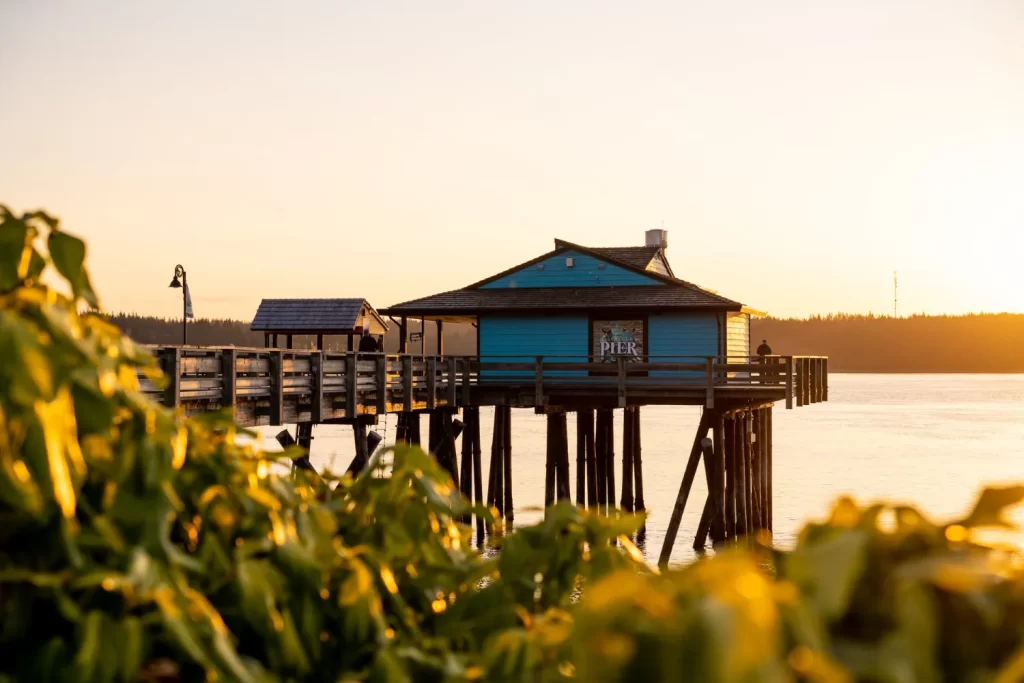
As Canada’s first saltwater fishing pier, the iconic Discovery Pier has been one of Campbell River’s defining landmarks since 1987. The pier extends 150 feet from shore and stretches 600 feet in total length.
The Experience: Standing on the pier puts visitors directly over the Discovery Passage with unobstructed views of Quadra Island, passing marine traffic, and (on a lucky day) whales or dolphins in the channel below. The pier is open 24 hours, fully lit, and wheelchair accessible. A seasonal concession stand open May to October offers rod and tackle rentals, fishing licences, ice cream, and more.
Trip Planning:
- Location: 655 Island Highway, Campbell River; beside the Government Wharf in downtown.
- Cost: Free to access; seasonal concession offers rod and tackle rentals (rates vary — confirm on-site)
- Season / Hours: Pier open 24 hours a day, year-round; concession stand open May–October
- Accessibility: Fully wheelchair accessible and lit with seating areas
- Booking: Not required
Insider Tip: Easy entry point for first-time anglers, with Rockfish and salmon the most common catches from the pier. Check the DFO website for current daily limits before you fish.
6. Quinsam River Salmon Hatchery
One of Canada’s largest salmon-rearing facilities, the Quinsam River Hatchery has been in operation since 1974, playing a central role in restoring salmon runs to the Campbell and Quinsam Rivers.
The Experience: SA glass floor inside the hatchery’s interpretive centre greets visitors, built over a re-creation of the local river environment complete with salmon, trout, and native aquatic species. Staff and interpretive materials explain the full salmon life cycle and the importance of hatchery conservation programs to BC’s wild fishery.
Trip Planning:
- Location: 4217 Argonaut Road, Campbell River. From downtown, drive west on Hwy 28 toward Gold River; turn left onto Quinsam Road approximately 200 m past the Hwy 19 intersection; follow for approx. 2 km to the signed entrance
- Cost: Free
- Hours: Gate open 8:00 am – 3:30 pm daily. The gate is locked promptly at 3:30 pm, ensure your vehicle is out before closing. Phone ahead to confirm holiday hours: 250-287-9564
- Accessibility: The interpretive centre is accessible; contact the hatchery for specific mobility details
- Booking: Not required for self-guided visits; group tours may require advance notice
Insider Tip: Visit in September or October to see salmon actively returning to the river.

7. Maritime Heritage Centre and BCP 45
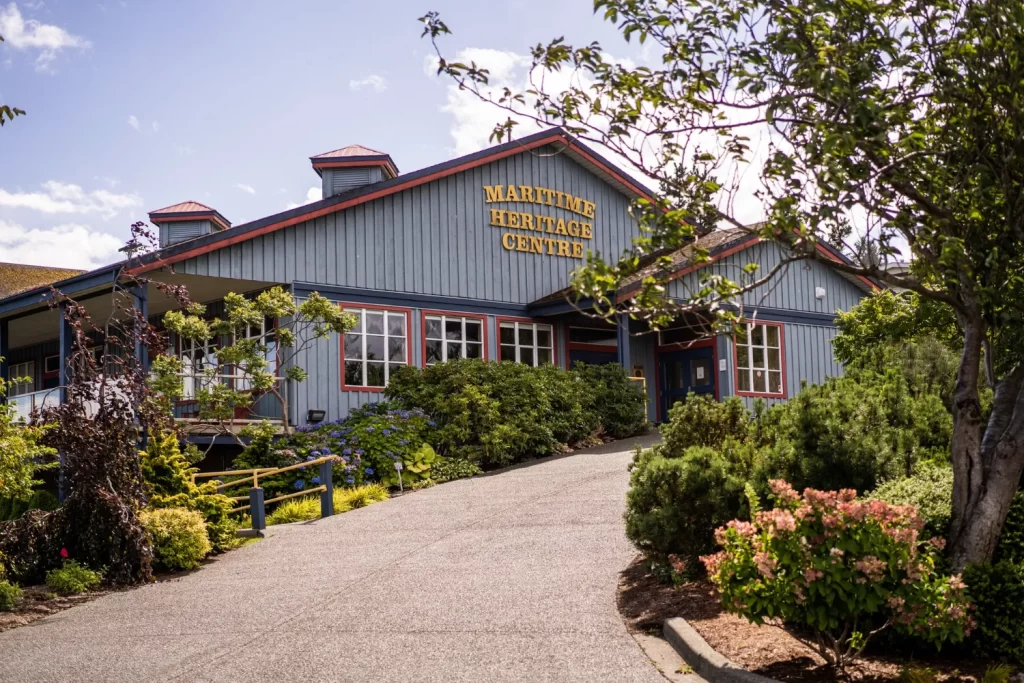
A community-built museum on the Campbell River waterfront that tells the story of the region’s fishing heritage through artifacts, exhibits, and a vessel famous enough to have appeared on Canadian currency.
The Experience: Visit the BCP 45, a restored wooden seine fishing boat that was featured on the back of the Canadian five-dollar bill from 1972 to 1986, and was designated a National Historic Site of Canada in 2004. Visitors can board the vessel and walk through the galley, crew quarters, engine room, and wheelhouse. The surrounding collection spans vintage outboard motors, navigational instruments, navy artefacts, and exhibits tracing both early Indigenous commercial fishing and the evolution of the West Coast fishery.
Trip Planning:
- Location: 621 Island Highway, Campbell River (waterfront, adjacent to Discovery Pier) Free parking available on-site
- Cost: $8 adults / $5 children and seniors.
- Hours: Monday–Friday 10:00 am–4:30 pm; Saturday–Sunday 10:00 am–2:00 pm; Check maritimeheritagecentre.ca/contact-us for holiday hours
- Accessibility: Ground floor accessible; contact the centre regarding full vessel access
- Booking: Not required; guided tours available on-site
Insider Tip: The Rotary Hall on-site is a timber framed hall with an expansive ocean view, an outdoor balcony, and AV capabilities. It’s perfect for weddings, corporate functions, celebrations of life, holiday events and more.
8. Tyee Spit / Dick Murphy Park & the Tyee Club
A scenic waterfront walk with views of the Discovery Passage, Quadra Island, and one of the most unique summer sporting spectacles in Canadian fishing culture.
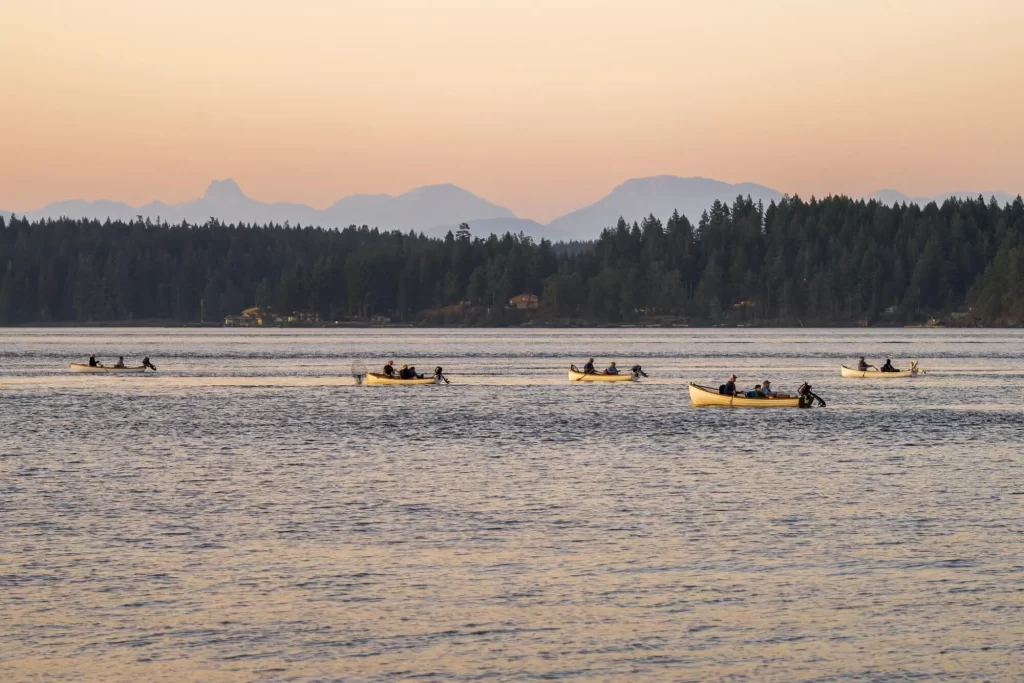
The Experience: Tyee Spit stretches along the edge of the Campbell River Estuary, offering views across to Quadra Island and out into the Passage where cruise ships, fishing boats, and wildlife share the channel. From mid-July through mid-September, the Tyee Club is active in the adjacent waters. The Tyee Club is a century-old institution: to earn membership, the angler must land a Chinook salmon weighing 30 lbs or more from a rowboat, using only a single hook, rod, and line, within the boundaries of Tyee Pool. Watching the rowboats work the current at dawn or dusk is a quietly remarkable experience.
Trip Planning:
- Location: 3200 Spit Road, Campbell River
- Cost: Free
- Hours: Open year-round; Tyee Club active July 15–September 15
- Difficulty: Easy walking; flat terrain
- Accessibility: Paved path to the spit; viewing platform accessible
- Booking: Not required
Insider Tip: The estuary-side viewing platform at the far end of the spit is the best spot to watch Tyee Club anglers at work — bring binoculars.
9. Rotary Seawalk
Campbell River’s 10 km paved coastal pathway runs along the shores of the Discovery Passage connecting beaches, parks, and local landmarks in a single continuous route.
The Experience: The Seawalk is flat, well-maintained, and open to walkers, joggers, and cyclists of all ages. The route passes the Big Rock, a large painted boulder associated with a Liǧʷiłdax̌ʷ legend, as well as the 50th Parallel marker, Rotary Beach Park, and several waterfront cafés and businesses. Views across to Quadra Island and through the Passage are continuous throughout, and whale or dolphin sightings from the path are common in season.
Trip Planning:
- Location: Accessible at multiple points along Island Highway; a central starting point is Rotary Beach Park
- Cost: Free
- Hours: Open use year-round
- Difficulty: Easy; flat, paved surface
- Accessibility: Paved surface along the majority of the route; suitable for wheelchairs, strollers, and cyclists.
- Booking: Not required
Insider Tip: The stretch near the 50th Parallel marker offers the widest, most unobstructed views of the Passage and is ideal at sunset.
10. Indigenous Tourism
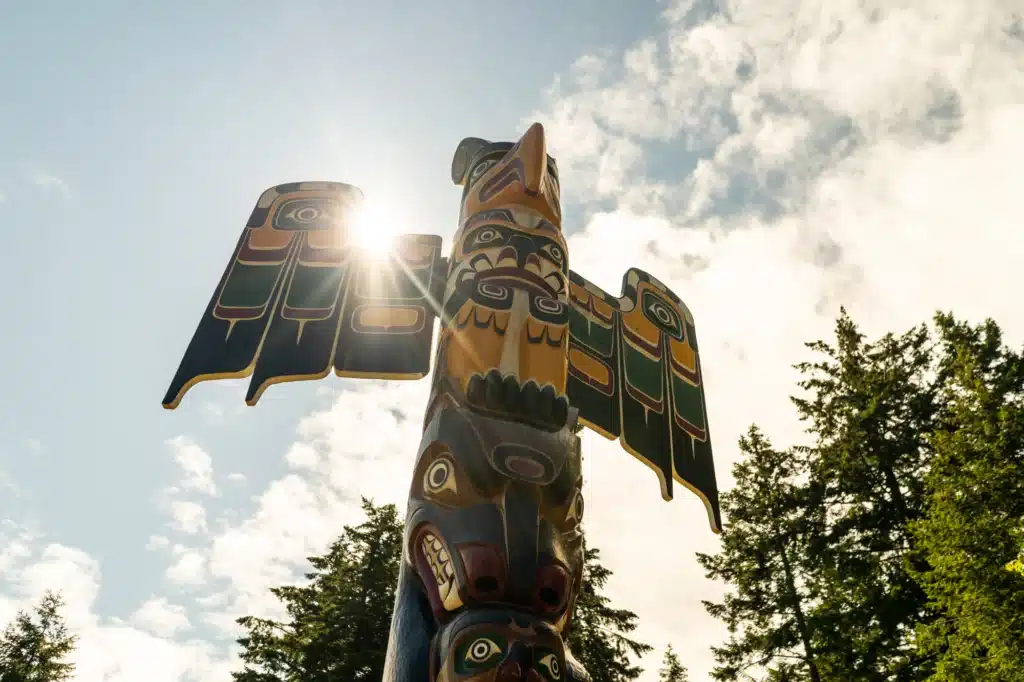
The Liǧʷiłdax̌ʷ Tourism Guide is designed to enrich your journey through Campbell River by highlighting the culture and traditions of the Liǧʷiłdax̌ʷ people that are deeply rooted in this land.
The Experience: Seek opportunities to explore a window into the traditions, art, and stories of the Liǧʷiłdax̌ʷ people. These experiences will deepen your connection to the land and those who have been stewarding it for centuries. By choosing to engage with Indigenous-owned businesses and services, you contribute to the ongoing vitality of the Liǧʷiłdax̌ʷ Nations.
Trip Planning:
- Location: The Liǧʷiłdax̌ʷ Tourism Guide journey through the City of Campbell River can be enjoyed at your own pace, using whichever mode of transportation is most comfortable for you—whether on foot, by bike, or by vehicle. For a deeper understanding of the area’s rich history, Elders recommend starting your journey at the Museum at Campbell River. Please note there are some Indigenous poles that should not be visited by the public as they have sacred meaning
- Cost: Most attractions are outdoor and free to view. Admission to the Museum at Campbell River is $10 for adults, $8 for seniors, and $6 for students
- Season: Yearround
- Accessibility: The Museum at Campbell River is fully accessible. Courtesy wheelchairs are available.
- Booking: Not required
- Guide Book: Liǧʷiłdax̌ʷ Tourism Guide

More Great Things to Do in Campbell River
Sayward Forest Canoe Circuit
A free 47 km canoe loop through a chain of interconnected lakes northwest of Campbell River, the Sayward Forest Canoe Circuit takes 3–5 days to complete and requires no advance reservation. Portages connect the lakes, and Crown land camping is available throughout the route. Bring all supplies from Campbell River before heading out, as there are no services along the route.
The Tyee Club
Founded in 1924, the Tyee Club is one of North America’s oldest angling institutions. To join, an angler must land a Chinook salmon of 30 lbs or more from a non-motorized rowboat, using a single hook and rod, within the designated boundaries of Tyee Pool off the Tyee Spit. The club is active from July 15 to September 15 each year, and watching the rowboats working the tidal currents at first light is a Campbell River ritual.
Local Beaches
Campbell River’s coastline offers several distinct beach experiences. Rotary Beach Park is the most central along the Seawalk and popular with families. Saratoga Beach, north of town off Hwy 19, is one of the finest sandy beaches on Vancouver Island’s east coast, with public access from Clarkson Avenue and calm water in summer. Miracle Beach Provincial Park (approx. 22 km north of Campbell River) combines a long sandy beach with forested campsites and is one of the most popular family camping destinations on the Island.
Beach Fire Brewing Company & Session Taproom
Campbell River’s local craft brews can be found at Beach Fire Brewing and Session Taproom, both offering a rotating selection of ales, lagers, and seasonal releases in a relaxed setting. A strong local following and kitchen service makes them both a natural stop after a day on the water or the trails. Visit beachfirebrewing.ca and sessioncr.com
Downtown Shoppers Row & Sunday Farmers Market
The heart of Campbell River’s downtown is Shoppers Row, a pedestrian-friendly stretch lined with independent retailers, cafés, and galleries. Every Sunday in May to September from 10 am to 2 pm, the Campbell River Farmers Market brings together local food producers, artisans, and makers. It’s an excellent place to pick up art, local products, and handmade goods.
Snowden Demonstration Forest
Located just outside Campbell River, the Snowden Demonstration Forest is home to an expanding network of singletrack mountain bike trails ranging from beginner-friendly flow trails to technical expert lines. Free to access. Bring your own bike or arrange a rental in town and check campbellriver.travel/activities/biking-trails/ for current trail maps.
Shelter Point Distillery
Shelter Point Distillery produces single malt whisky and vodka using grain grown on the estate farm. Tours are available and give visitors a look at the distilling process from grain to bottle in one of BC’s most scenically situated distilleries. Verify current tour availability and hours directly at shelterpointdistillery.com.
Coastal Black Estate Winery
Coastal Black is one of Vancouver Island’s northernmost fruit wineries, producing wines from local blackcurrants, blackberries, and other estate-grown fruit rather than traditional grapes. Tastings and tours available at coastalblack.ca.
Snorkelling with Salmon & Oceanfix Dive Shop
One of Campbell River’s most unusual visitor experiences: snorkelling in the Campbell River alongside returning salmon during the fall run. Oceanfix Dive Shop facilitates guided snorkel sessions that put you in the water alongside salmon as they make their way upstream. Contact Oceanfix directly for current availability and booking: oceanfix.ca.
Mount Washington Alpine Resort Summer Activities
In summer, Mount Washington (approximately 45 minutes from Campbell River) operates a mountain bike park, chairlift rides, Vancouver Island’s largest zipline, and hiking trails through alpine meadows. In winter, it becomes one of Vancouver Island’s best ski and snowboard destinations. Visit mountwashington.ca for seasonal programming, events and pricing.


When to Visit Campbell River
Spring (March–May)
Elk Falls is at peak flow, offering the best time to see the falls at full force. Whale watching typically begins in April as humpbacks return to the Inside Passage. Wildflowers bloom in Strathcona Provincial Park from late April. Crowds are minimal across all attractions. Mount Washington may still have snow through March and into April.
Summer (June–August)
Peak season across the board. All whale-watching operators are running full schedules. Salmon fishing peaks for Chinook and Coho. The Sunday Farmers Market is active. Discovery Pier’s concession stand is open. The Tyee Club is active from July 15. Saratoga Beach and Miracle Beach are at their best. Book accommodation and guided tours well in advance.
Fall (September–October)
The best season for grizzly bear watching along the West Coast. Homalco Wildlife tours operate through mid-October as bears gather along Bute Inlet rivers. Coho and Chinook return to the Quinsam River and hatchery, with salmon viewing at its most dramatic in September. Autumn colours appear in Strathcona Park from late September. Significantly fewer visitors than summer.
Winter (November–February)
Skiing and snowboarding at Mount Washington (approximately 45 minutes from the city). Campbell River itself is quieter, with a stark, stormy coastline that has its own appeal. Some tour operators run year-round, check individual operator schedules before planning a winter visit.
Visitor Tips & Practical Information
- Getting There: Campbell River is approximately 3.5 hours north of Victoria and 1.5 hours north of Nanaimo via Hwy 19. Campbell River Airport (YBL) offers scheduled connections to Vancouver.
- Getting Around: A car is strongly recommended. Most attractions are spread across a wide area, and public transit options are limited. The Rotary Seawalk is bikeable with rental bikes available in town.
- Bear Safety: Black bears are regularly encountered near the Quinsam River and within Strathcona Provincial Park. Carry bear spray on any backcountry trail and follow BC Parks guidelines on food storage and wildlife encounters.
- Fishing Licences: Required for both tidal (saltwater) and freshwater fishing in BC. Purchase online through the Department of Fisheries and Oceans (DFO) website, or from the Discovery Pier concession stand during the May–October season.
- Indigenous Experiences: Homalco Wildlife & Cultural Tours is Indigenous-owned and operated, combining grizzly bear watching with Homalco First Nation cultural interpretation. Highly recommended as both a wildlife and cultural experience.
- Free Activities: Many of Campbell River’s most memorable activities are entirely free: Elk Falls Provincial Park, the Rotary Seawalk, the Ripple Rock Trail, Quinsam Hatchery, local beaches, and the Sayward Forest Canoe Circuit all cost nothing to access.
- Cell Coverage: Cell coverage within city limits. Expect limited or no cell service in Strathcona Provincial Park and on remote canoe routes. Download offline maps before leaving the city.

Frequently Asked Questions
Where is Campbell River?
Campbell River is a city on the northeast coast of Vancouver Island, in British Columbia, Canada. It sits along the Discovery Passage (the narrow strait separating Vancouver Island from Quadra Island) and borders Strathcona Provincial Park to the west. It is one of the larger cities on Vancouver Island, with a population of approximately 35,000.
How far is Campbell River from Nanaimo?
Campbell River is approximately 155 km north of Nanaimo via Hwy 19, a drive of roughly 1.5 to 2 hours depending on traffic.
How far is Campbell River from Victoria?
Campbell River is approximately 270 km north of Victoria via Hwy 1 and Hwy 19, typically a 3.5 to 4 hour drive depending on traffic.
How far is Campbell River from Comox?
Campbell River is approximately 60 km north of Comox / Courtenay via Hwy 19, a drive of approximately 45 minutes to 1 hour.
Does Campbell River have an airport?
Yes. Campbell River Airport (YBL) is located approximately 20 minutes south of the city centre and offers scheduled flights connecting to Vancouver International Airport and Calgary International Airport. Check current carriers and schedules directly with the airport or through flight booking platforms.
Does Campbell River have Uber?
Uber does not operate in Campbell River. Local taxi services and some ride-share options are available. Contact the Campbell River Visitor Information Centre for current transportation options, or check with your accommodation.
Are beach fires allowed in Campbell River?
Beach fire regulations in Campbell River vary by location and season, and can change based on provincial fire danger ratings. During high fire-danger periods, open fires — including beach fires — may be prohibited across BC. Always check the current BC Wildfire Service fire ban status at bcwildfire.ca before lighting any fire, and confirm local rules with the City of Campbell River or BC Parks.