


The Bears of Coastal BC & Vancouver Island
An Ecosystem of Giants
Vancouver Island is the gateway to a vast temperate rainforest of ancient cedars and misty estuaries. While the island is home to black bears, the rugged mainland inlets across the Johnstone Strait reveal the heart of grizzly territory, and some of North America’s most iconic wildlife concentrations.
Life in the Rainforest
Coastal bears follow a critical annual lifecycle: emerging from winter rest to graze in spring estuaries, foraging for summer berries and shellfish, and finally gathering at autumn rivers to gorge on spawning salmon. This allows them to build the fat reserves needed to repeat this seasonal rhythm.
Grizzly Bears
Distinguishing Features
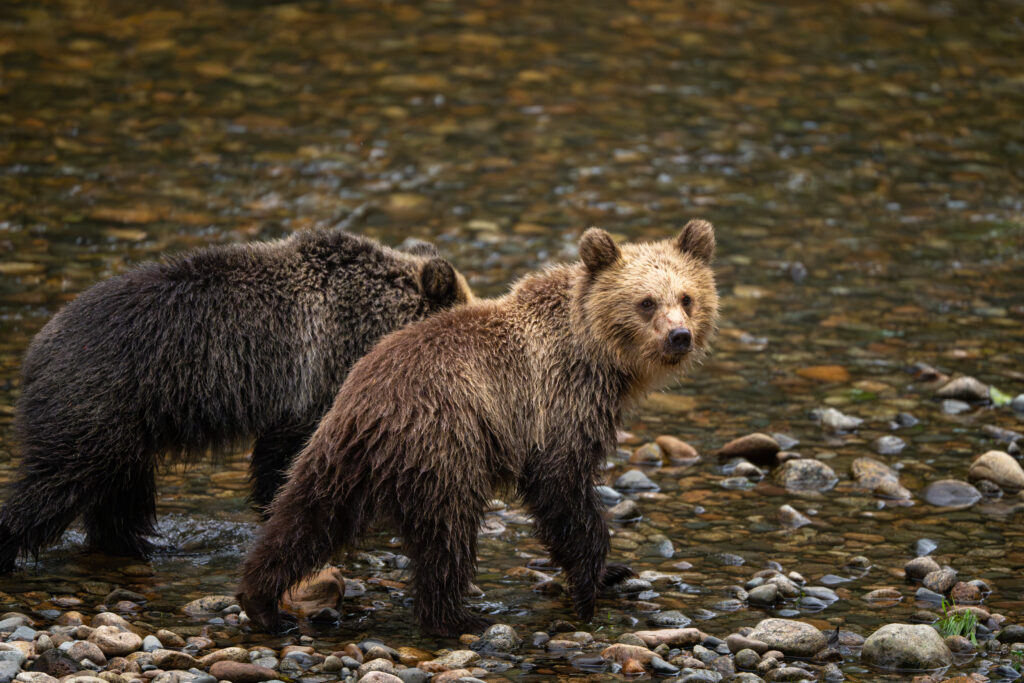
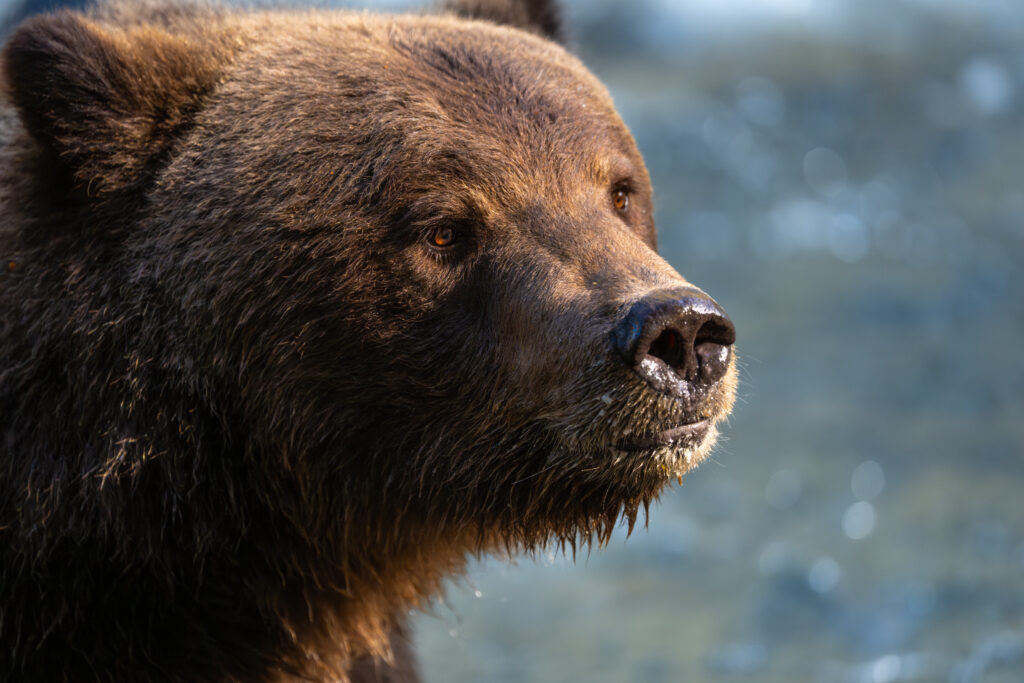
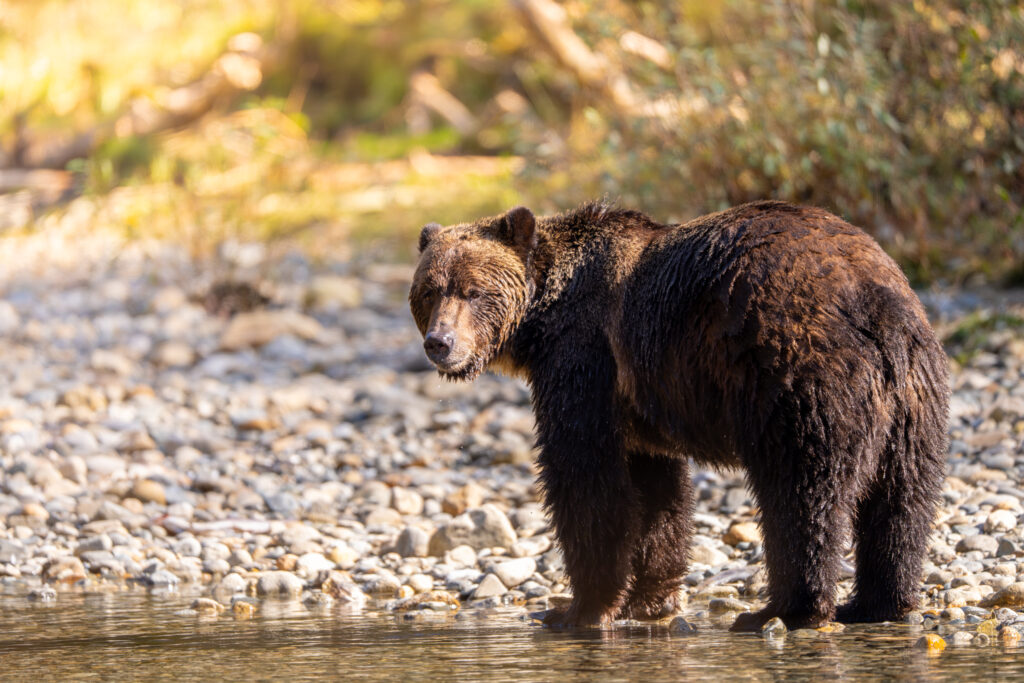
Dished facial profile, prominent shoulder hump, and long, straight claws. Colours range from blonde to dark brown, often with silver-tipped “grizzled” fur.
Behaviour
Masters of the river system; primarily found in mainland estuaries and glacial mountain ranges.
Diet
High-energy diet of sedge grasses, roots and tubers, shellfish, scavenged marine mammals, and spawning salmon.
Black Bears
Distinguishing Features
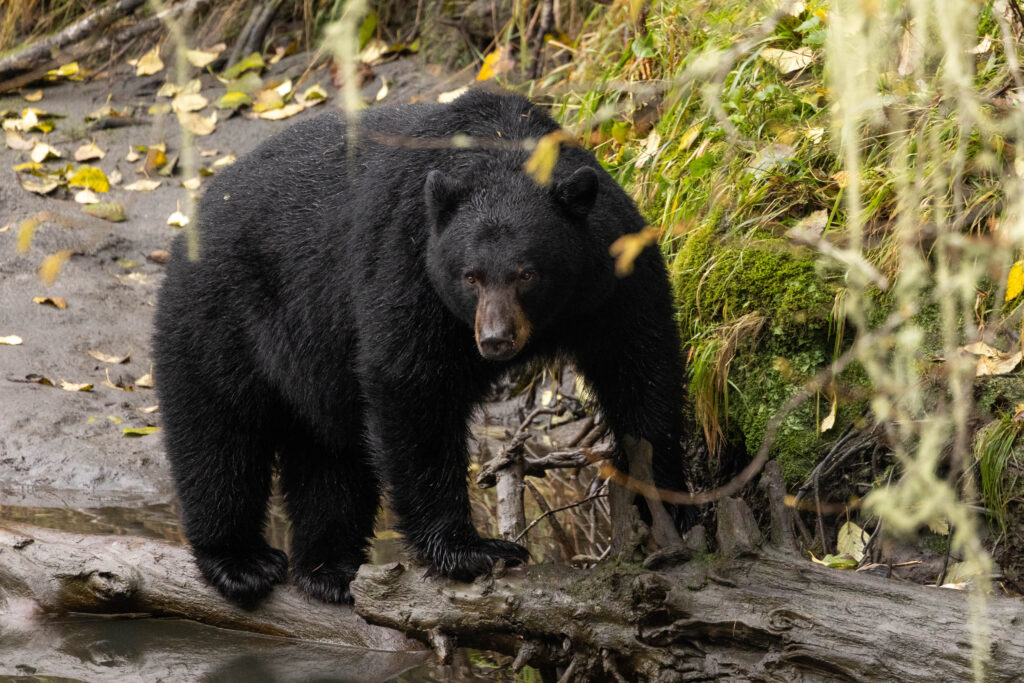
Straight facial profile and large, pointed ears; lacks a shoulder hump. Primarily black in colour but can appear as cinnamon or white (including the elusive subspecies, the Kermode bear, or spirit bear).
Behaviour
Highly adaptable, agile climbers; the primary bear species found on Vancouver Island.
Diet
Berries, insects, and succulent plants, supplemented by foraging for intertidal crabs and shellfish.
The Viewing Experience
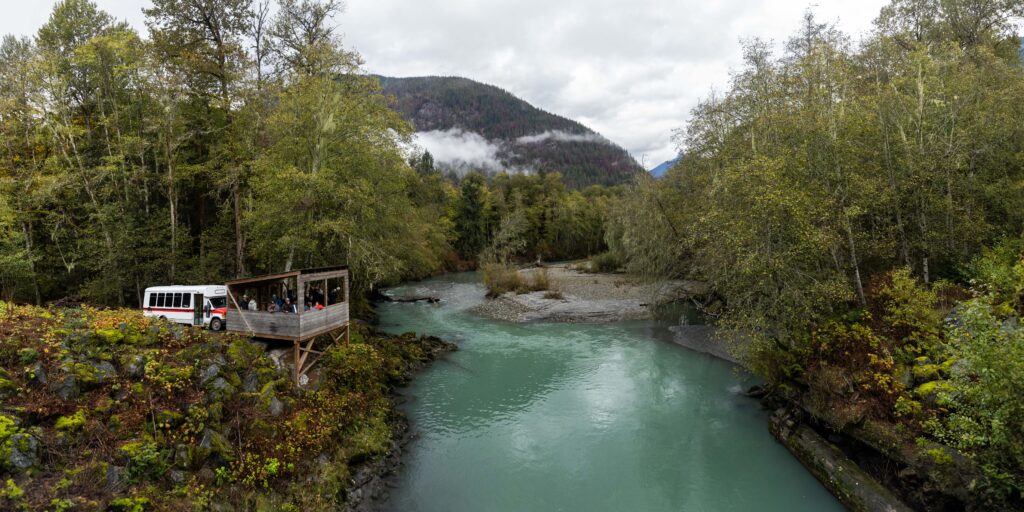
Guests can witness bears through a variety of expedition styles and lengths, including land-based viewing or via marine tours that navigate the deep channels of coastal British Columbia. In addition, Humpback whales, Orcas, Steller sea lions, and Bald eagles can be spotted during tours.
The Best Time to View
Spring
(April - June)
Bears emerge to forage in estuaries, regaining their strength with cubs in tow. Late spring marks the mating season, offering rare views of the dramatic social posturing of large males.
Summer
(July - Mid-August)
Bears roam between forests and shores to gorge on berries and shellfish. Viewing focuses on low tide zones where bears scavenge for prey when not in the shade of the rainforest.
Autumn
(Late August - October)
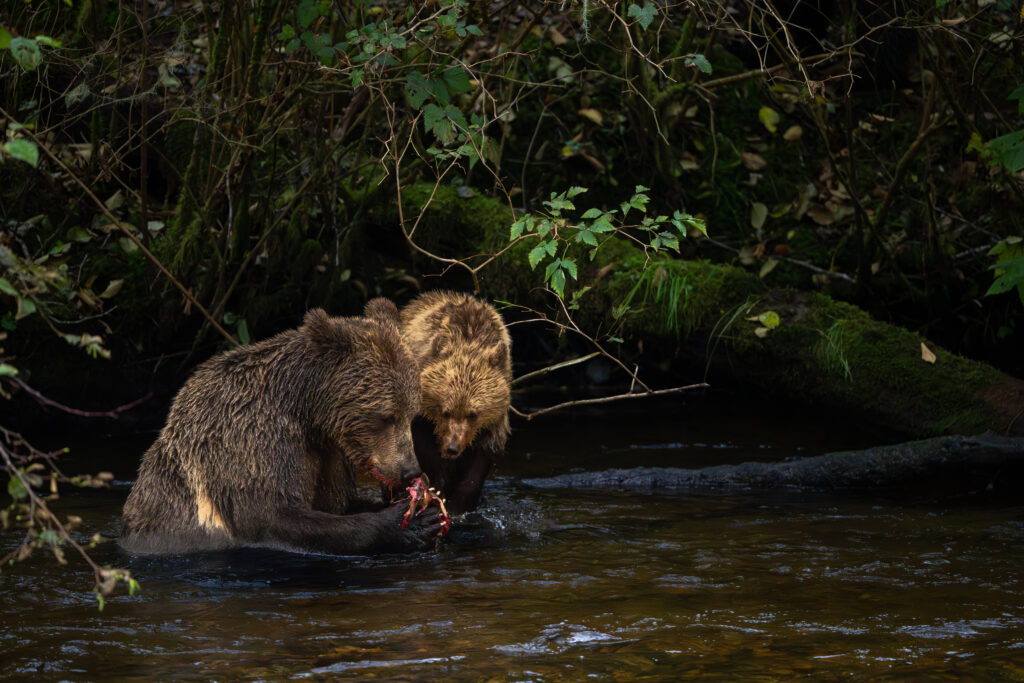
Peak season for high-density viewing as bears gather at rivers to feast on salmon. Witness active fishing, from powerful lunges in the rapids to quiet “snorkelling” in the calmer pools.
DAY TRIP EXCURSIONS
CBVA-Certified Operators
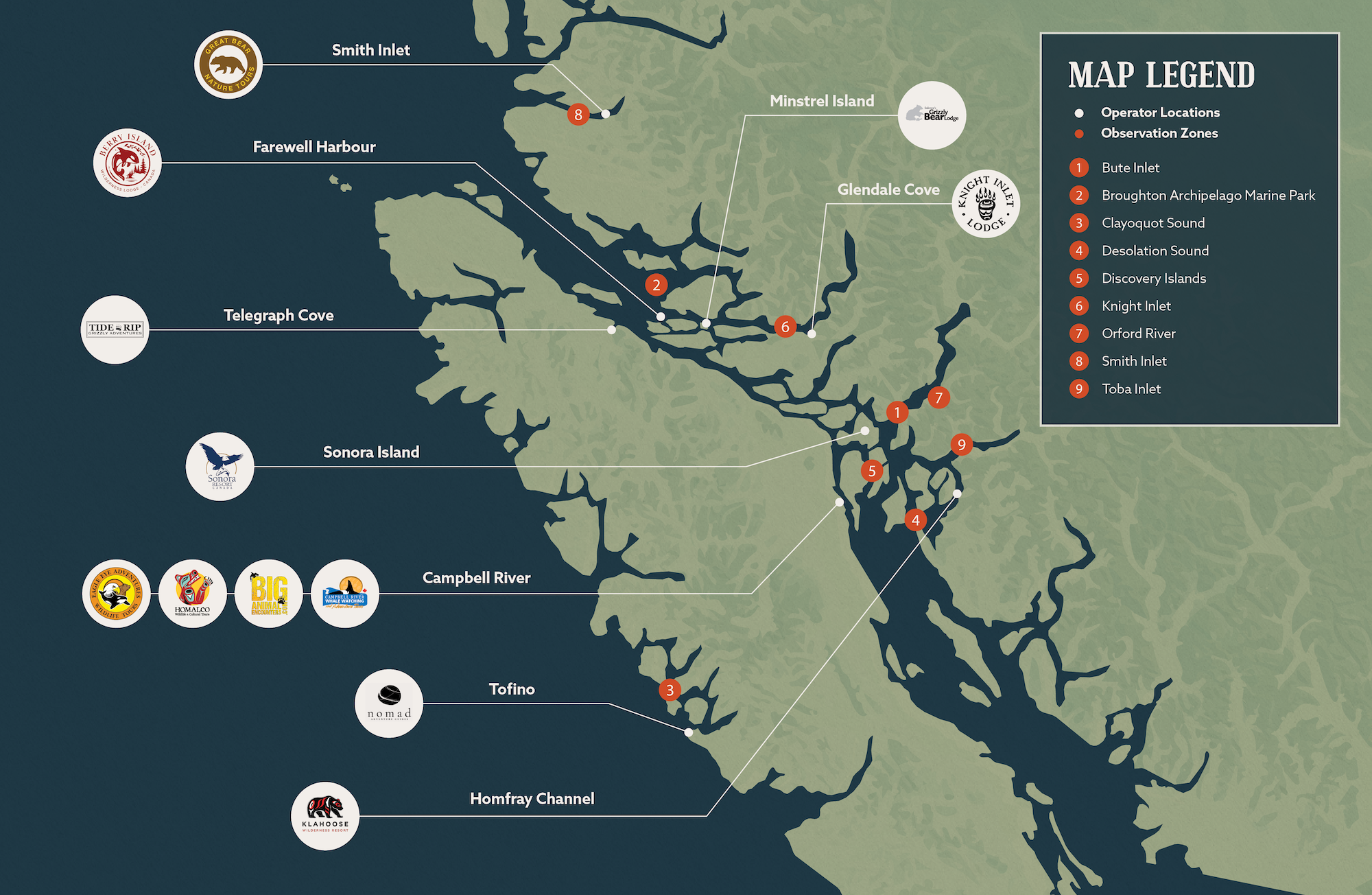
Perfect for travellers based in regional hubs like Campbell River, Telegraph Cove, or Tofino. These full-day or half-day expeditions offer marine wildlife tours with expert guides.

Big Animal Encounters
biganimalencounters.com- LocationCampbell River
- Observation ZoneBute Inlet
- Getting HereCampbell Rver
- Operating SeasonApril to October

Campbell River Whale Watching
campbellriverwhalewatching.com- LocationCampbell River
- Observation ZoneBute Inlet & Toba Inlet
- Getting HereCampbell River
- Operating SeasonApril - October

Eagle Eye Adventures
eagleeyeadventures.com- LocationCampbell River
- Observation ZoneBute Inlet & Toba Inlet
- Getting HereCampbell River
- Operating SeasonMay to October

Homalco Wildlife & Cultural Tours
homalcotours.com- LocationCampbell River
- Observation ZoneBute Inlet & Toba Inlet
- Getting HereCampbell River
- Operating SeasonApril to October

Nomad Adventure Guides
nomadadventureguides.com- LocationTofino
- Observation ZoneClayoquot Sound
- Getting HereTofino
- Operating SeasonMay to October

Tide Rip Grizzly Tours
tiderip.com- LocationTelegraph Cove
- Observation ZoneKnight Inlet (Glendale Cove)
- Getting HereTelegraph Cove
- Operating SeasonMay to September
Lodge EXCURSIONS
CBVA-Certified Operators
Stay in the heart of the habitat. These remote, world-class lodges offer multi-day programmes designed for deep immersion into the lives of coastal bears.

Berry Island Wilderness Lodge
farewellharbour.com- LocationFarewell Harbour on Berry Island
- Observation ZoneBroughton Archipelago Marine Park
- Getting HereVia Boat from Alder Bay
- Operating SeasonJune to October

Great Bear Lodge
greatbeartours.com- LocationFloating Lodge in Smith Inlet
- Observation ZoneSmith Inlet
- Getting HereVia Seaplane from Port Hardy
- Operating SeasonMay to October

Klahoose Wilderness Resort
klahooseresort.com- LocationHomfray Channel
- Observation ZoneDesolation Sound & Toba Inlet
- Getting HereVia Boat/Seaplane from Campbell River Via Boat transfer from Lund Harbour
- Operating SeasonMay to October
Knight Inlet Lodge
grizzlytours.com- LocationKnight Inlet
- Observation ZoneKnight Inlet (Glendale Cove)
- Getting HereVia Seaplane from Campbell River
- Operating SeasonMay to October

Sailcone's Grizzly Bear Lodge
grizzlybearwatching.com- LocationMinstrel Island
- Observation ZoneKnight Inlet
- Getting HereVia Seaplane from Campbell River
- Operating SeasonMay to October

Sonora Resort
sonoraresort.com- LocationSonora Island
- Observation ZoneDiscovery ISland & Orford River
- Getting HereVia Water Taxi from Campbell River Via Helicopter from Vancouver
- Operating SeasonMay to October
COMMERCIAL BEAR VIEWING ASSOCIATION OF BC
Leading the Way in Responsible Bear Viewing
The Commercial Bear Viewing Association (CBVA) was formed in 1996 to promote sustainable bear viewing in British Columbia. The mission is to ensure the protection of bears and their habitats while providing world-class, educational experiences for guests.
Why Choose a Certified Operator?
When you book with a CBVA member, you are supporting operators who adhere to a strict Code of Conduct.
Members undergo rigorous training and certification to ensure that viewing practices include:
Commitment to bear conservation and habitat protection.
Professionally trained guides with specialized ecology certification.
Ethical viewing distances and noise-reduction protocols.
Stay Wildsafe
Protecting the Wildlife
WildSafe is a proactive conservation strategy that encourages efforts by communities to reduce negative human-wildlife interactions. By following WildSafe principles, you help keep BC’s bears wild and safe.
Never feed wildlife, keep a respectful distance, and always follow your guide’s instructions to ensure a safe environment for both humans and bears.